The Ultimate Guide to Modern Communication Evaluation and Style Profiling
- 20 November 2025
Find Your DISC Personality Profile With a Test
Get StartedWhat This Evaluation Really Measures
Successful interaction is not just about eloquence; it’s about intent, clarity, timing, and the ability to read the room. Any robust evaluation examines listening depth, message organization, nonverbal alignment, and adaptability across contexts. When stakes rise, people revert to default habits, so measurements must capture both baseline behavior and stress responses. By focusing on observable patterns rather than vague impressions, a well-built instrument reveals how messages travel, mutate, and either resonate or miss the mark.
Beyond surface-level quizzes, a communication test digs into turn-taking, questioning DISCipline, and the feedback loops that enable mutual understanding. Calibrated scoring shines a light on where a message derails, whether due to jargon, missing context, or over-assumption. Practitioners also examine the ecological validity of scenarios, ensuring that items feel authentic across industries, cultures, and team sizes.
In everyday practice, a communications test helps leaders, specialists, and cross-functional teams identify systemic blockers before they escalate. The best tools are transparent about scoring and provide exemplars that illustrate what “excellent,” “sufficient,” and “needs work” actually look like in real conversations. With that specificity, participants leave with practical behaviors they can implement the very next day.
Benefits and ROI for Individuals and Teams
Results are most valuable when they lead to action, not just reflection. Individuals gain sharper self-awareness, while organizations build shared language to DISCuss collaboration without blame. Coaching plans become more targeted, and meeting dynamics improve because contributors understand both their strengths and their blind spots. Over time, these micro-improvements compound, raising trust, reducing rework, and accelerating decisions.
When designed with clear benchmarks, a communication skills test converts qualitative observations into quantitative signals that inform development plans. Hiring teams use those insights to complement interviews, while managers translate scores into tailored practice drills. The leap from insight to habit is then sustained through spaced repetition, peer feedback, and guided retrospectives.
- Sharper messaging under pressure and ambiguity
- Fewer misunderstandings and reduced escalation cycles
- Higher meeting efficiency and shorter time to alignment
- Better onboarding through shared frameworks and vocabulary
- More equitable participation across different voices and styles
For role alignment, a communication personality test can reveal where someone will thrive, such as negotiation-heavy work versus documentation-centric roles. Teams gain clarity on complementary strengths, making it easier to allocate responsibilities and set norms. The upshot is smoother collaboration that feels both respectful and productive.
Frameworks, Models, and Method Choices
There are multiple ways to lens interpersonal behavior, from trait-based models to context-dependent simulations. Trait approaches emphasize stable preferences, while situational methods assess how someone adapts when variables shift. Hybrid designs combine a baseline profile with scenario tasks, capturing both who you are and what you do when conditions change. Selecting an approach depends on goals: hiring, leadership development, sales enablement, or conflict resolution.
For quick orientation to patterns, a communication style test summarizes tendencies across dimensions like pace, directness, empathy, and structure. That overview can serve as a map for targeted practice, steering learners toward the exercises most likely to deliver outsized returns. Careful interpretation ensures that labels are starting points for dialogue, not boxes that constrain growth.
For group rollouts, a communication styles test lets teams compare preferences safely and construct norms that honor everyone’s best work. Facilitators can anchor workshops on shared definitions, making it easier to talk about tensions without personalizing the critique. Over time, the group codifies playbooks for recurring moments such as kickoffs, handoffs, and retrospectives.
| Method | Best Use Case | What To Watch |
|---|---|---|
| Trait-based profiling | Foundational self-awareness and shared vocabulary | Avoid stereotyping; emphasize range and situational flex |
| Scenario simulations | Role-specific behaviors under realistic constraints | Ensure scenarios match real challenges and context |
| 360 feedback integration | Holistic view across peers, reports, and managers | Normalize rater training to reduce halo effects |
| Hybrid assessments | Balanced picture of preference and performance | Align scoring rubrics and debrief time with goals |
How to Run, Score, and Interpret
Implementation matters as much as instrument quality. Clear instructions, reasonable time limits, and psychologically safe framing improve participation and fidelity. Scoring should distinguish between content quality, delivery mechanics, and adaptive choices, with feedback tied to concrete behaviors. Finally, interpretation must account for culture, language, and accessibility, so insights are fair and inclusive.
Before enterprise rollout, a communication assessment test benefits from a small pilot that checks clarity, timing, and item difficulty. Analysts review differential item functioning to ensure that results are equitable across groups. Facilitators prepare coaching guides so frontline leaders can translate outputs into weekly practice with their teams.
During drills and retros, teams often test communication channels by simulating outages, handoffs, and high-stakes updates to validate resilience. Debriefs examine decision points, message structure, and listener cues, turning insights into next-step actions. Consistency emerges when organizations revisit norms regularly, not only after problems arise.
- Define objectives and select an instrument that matches goals
- Pilot with diverse participants and refine ambiguous items
- Train debriefers to connect results to behavior change
- Reassess periodically to track growth and recalibrate plans
Popular Style Frameworks and Colors Explained
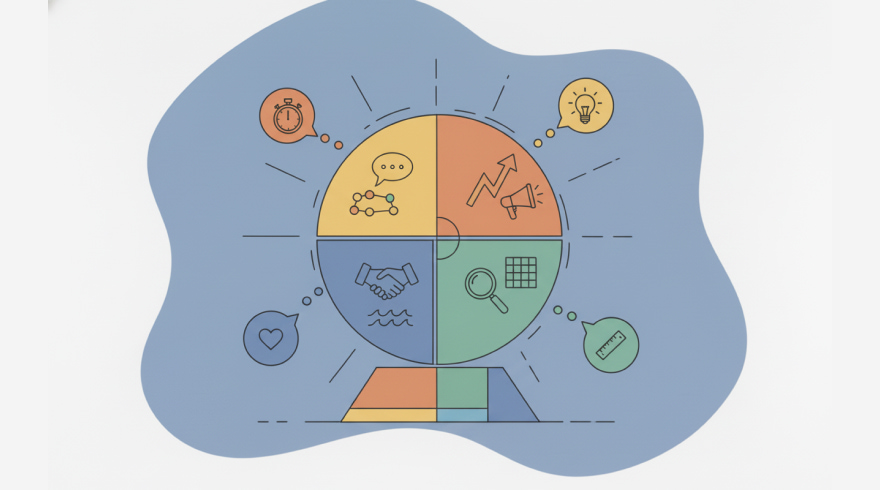
Many teams prefer visual, memorable models that make patterns easy to recall under pressure. Quadrant frameworks and color maps simplify complex behavior without requiring heavy theory. The key is using them as conversation starters to build empathy and collaboration, not as excuses to avoid stretching outside comfort zones. Skillful facilitators keep the nuance while still giving people simple tools they can use right away.
In color-centered approaches, a communication style color test links hues to pacing, priority, and decision energy, making it easy to reference preferences in meetings. Teams can adopt color-informed cues on agendas, updates, and feedback to improve alignment. That shared shorthand accelerates planning and reduces friction across functions.
For a structured, research-backed lens, a DISC communication styles test frames behavior around dominance, influence, steadiness, and conscientiousness to guide collaboration norms. Participants learn how each pattern contributes value and where misunderstandings commonly occur. With practice, partners adapt intentionally, matching tone, speed, and detail to audience needs.
- Use labels to spark curiosity rather than finalize identity
- Pair profiles with micro-experiments to build flexibility
- Translate insights into meeting norms and project cadences
- Revisit profiles as roles, stakes, and contexts evolve
FAQ: Practical Answers to Common Questions
What is the purpose of these evaluations?
The central aim is to convert fuzzy impressions into actionable insights that improve everyday interaction. For team adoption and shared language, many organizations rely on communication style tests to create a baseline that informs coaching and norms.
How accurate are the results?
Accuracy depends on instrument design, validation samples, and the fit between scenarios and real work. When combined with a personality test communication style lens and behavioral observation, precision improves and coaching becomes more targeted.
How often should people retake an evaluation?
Retesting cadence should match the pace of role change, team formation, and strategic shifts. Many teams reassess every six to twelve months to capture growth and recalibrate development plans without creating assessment fatigue.
Can results be used for hiring decisions?
Yes, but they should complement job-relevant work samples and structured interviews, not replace them. Organizations that use results responsibly focus on behaviors tied to success and provide accommodations to ensure fairness.
What is the best way to act on the findings?
The fastest gains come from translating insights into tiny, repeatable habits practiced in real meetings. Managers should schedule brief drills, give specific feedback, and track progress with simple metrics that reinforce improvement.