The Essential Guide to the DISC Test for Fast, Insightful Self-Discovery
- 24 November 2025
Find Your DISC Personality Profile With a Test
Get StartedWhat the DISC Framework Is and Why It Matters
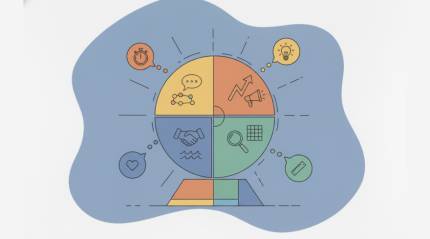
DISC is a behavioral framework that explains how people approach tasks, relationships, and stress. Many newcomers start by trying a DISC personality test free alternative to preview the experience and learn the core language. The four styles, Dominance, Influence, Steadiness, and Conscientiousness, offer a practical lens for self-awareness, giving you vocabulary for needs, speed, and decision preferences. Understanding these patterns helps you communicate clearly, avoid friction, and collaborate with agility across projects and teams.
Because the framework is intuitive, you can learn the essentials in an afternoon and apply them immediately. You can practice with a DISC test for free, hosted by reputable platforms that explain the model with simple visuals. That quick exposure usually sparks deeper curiosity about how style blends shift across contexts like deadlines, ambiguity, or conflict. Leaders, coaches, and students all benefit from the language of needs, pace, and priorities in everyday work, and the shared terms speed up planning and feedback conversations.
- Boost emotional intelligence by naming triggers and motivators.
- Improve collaboration with clear norms for meetings and handoffs.
- Reduce misunderstandings by tailoring channel, tone, and timing.
- Scale coaching with a consistent, memorable framework.
How Free DISC Assessments Work and What to Expect
Most questionnaires present pairs or groups of statements and ask you to choose which describes you best. When comparing options, a free DISC personality test should still offer clear explanations of style tensions and energy drains to prevent misread results. Good instruments DISClose what they measure and how they convert answers into style maps, including situational behavior and under-pressure patterns. Transparent providers also explain reliability, limitations, and how to interpret blended profiles.
Short forms can be convenient, but they trade off nuance for speed. Short quizzes marketed as a free DISC test often skip nuance around pressure responses and blind spots that emerge during real-world stress. Longer formats add depth with situational prompts that reveal behaviors under stress, making the guidance more actionable for team meetings and client interactions. Calibration items can also catch inconsistent answering and improve accuracy.
If you want credible insights, verify whether the provider cites research or validation studies. Look for a free DISC assessment test that includes situational prompts and a transparent scoring overview so you can trust the takeaways. Be wary of sites that give colorful labels without any interpretation guidance or next steps, because catchy descriptions without context can lead to stereotyping. A credible report should outline strengths, risks, and practical adjustments to try immediately.
- Expect 10–20 minutes for short forms and 25–45 for deeper options.
- Seek reporting that explains both natural and adapted styles.
- Check for guidance on communicating with each style quickly.
- Prefer providers that show privacy and data-retention policies.
Quick Reference: Styles, Motivators, and Collaboration Tips
Each style has distinct motivators, stressors, and communication preferences that shape collaboration. Some portals bundle a DISC free test with career tips, worksheets, or starter coaching scripts to help you convert insights into action quickly. The overview below summarizes common strengths and watch-outs by style to speed your reading and make team planning simpler. Use it during project kickoffs to set norms that reduce friction and amplify strengths.
Use the table as a quick reference while you review your report or talk through results with a colleague. For speed, a DISC assessment free online test lets you assess traits on mobile and then compare notes using this grid for clarity. Pair the snapshot with short role-plays so the guidance moves from theory into routine practice on your team. You can update norms as projects evolve and stakes shift.
| Style | Core Motivators | Best Communication | Common Pitfalls |
|---|---|---|---|
| Dominance (D) | Autonomy, results, velocity | Be brief, focus on outcomes, offer choices | Impatience, overlooking details or consensus |
| Influence (I) | Recognition, relationships, variety | Be enthusiastic, share stories, invite input | Overpromising, drifting from priorities |
| Steadiness (S) | Harmony, stability, support | Be warm, pace changes, provide reassurance | Resisting change, avoiding difficult conversations |
| Conscientiousness (C) | Accuracy, logic, structure | Be precise, show evidence, clarify criteria | Overanalyzing, delaying decisions |
Remember that no one is a single letter in every situation; people adapt based on stakes, roles, and norms. Use the table to forecast friction before it happens, and plan counterbalances such as checklists for fast-paced groups or time-boxed decisions for analytic teams. Document agreed-upon behaviors after meetings so the insights persist beyond a single workshop. Revisit and refine norms as your team matures and goals change.
From Insight to Action: Applying Your Results at Work and Home
Turn insights into action by writing two or three habits you will try in real meetings. If you prefer worksheets, a DISC personality test free download can help teams offline as they practice new tactics and capture commitments. Pair those worksheets with role-plays to stress-test communication choices and debrief outcomes for continuous improvement. Set calendar nudges to revisit progress, and keep adjustments small but consistent.
Teachers and facilitators often start with short activities that reveal style preferences without judgment. A starter-level DISC profile test free can be enough for classroom use when combined with structured reflection and peer feedback. Participants then refine language for giving feedback, setting expectations, and aligning on timelines to reduce unnecessary tension. Rotating roles during exercises ensures everyone builds flexibility across styles.
Organizations exploring assessments at scale should pilot with a small cross-functional group first. For pilots, a DISC assessment test free trial is a safe first step before purchasing enterprise tools to integrate with learning systems. Track outcomes like meeting efficiency, conflict reduction, and customer satisfaction to judge impact and prove value. If returns are strong, expand with targeted coaching and leader toolkits.
- Translate style insights into specific agreements for email, chat, and meetings.
- Use checklists for planning, feedback, and decision protocols.
- Pair opposite strengths for balance, such as D with C, or I with S.
- Review progress monthly and revise norms as projects evolve.
Accuracy, Ethics, and Getting the Most Value
Results offer a snapshot of behavior, not a fixed identity, so avoid using labels as ceilings. Some libraries curate a DISC model test free packet for students, yet context and coaching still determine value across different environments. Quality facilitation prevents stereotyping, and regular practice turns insights into real capability for individuals and teams. Treat assessments as a starting line rather than a finish line in your development plans.
Protect privacy by choosing providers that DISClose data practices and allow deletion on request. Use results ethically by focusing on development, not exclusion, and by encouraging everyone to try small, observable behavior shifts. When leading teams, ask for consent before sharing reports and create a safe environment for experimentation. In coaching, connect insights to goals that matter, and keep tracking behaviors that move the needle.
- Do set clear intentions and capture two habits per person.
- Do build shared norms and revisit them regularly.
- Don’t stereotype or justify poor behavior with a letter label.
- Don’t treat reports as destiny; treat them as hypotheses to test.
FAQ: Common Questions About Free DISC Options
Is DISC a personality test or a behavioral assessment?
It is best described as a behavioral model that maps observable patterns such as pace, priority, and preference under different conditions. Rather than typing your core identity, it highlights how you tend to act and communicate, which can change by context. This makes the framework practical for daily collaboration and self-coaching.
Are no-cost versions accurate enough for practical use?
Many short instruments are directionally useful if they provide clear definitions and examples, but depth varies widely by provider. International learners appreciate a free DISC test online with multilingual glossaries, but interpretation still benefits from DISCussion and guided reflection. For higher-stakes applications, supplement results with coaching, multi-rater feedback, and direct observation.
Can I use results for hiring decisions?
Use caution and comply with local laws, because the tool was designed for development rather than selection. Hiring requires validated measures for the specific job and rigorous, fair processes that minimize bias. Keep DISC for onboarding, communication norms, and team development where it excels.
How long does a typical assessment take to complete?
Short forms often take 10–15 minutes, while richer questionnaires can take 25–40 minutes depending on reading speed. Report review, DISCussion, and action-planning add time, yet those steps create the biggest payoff. Plan an hour for a complete cycle if you want actionable outcomes.
What should I do after I receive my results?
Pick one relationship and one routine meeting to adjust using your insights, and write down the specific behaviors you will try. Share your plan with a colleague for accountability, and schedule a follow-up to capture lessons. Repeat the cycle with new situations until the habits feel natural.